
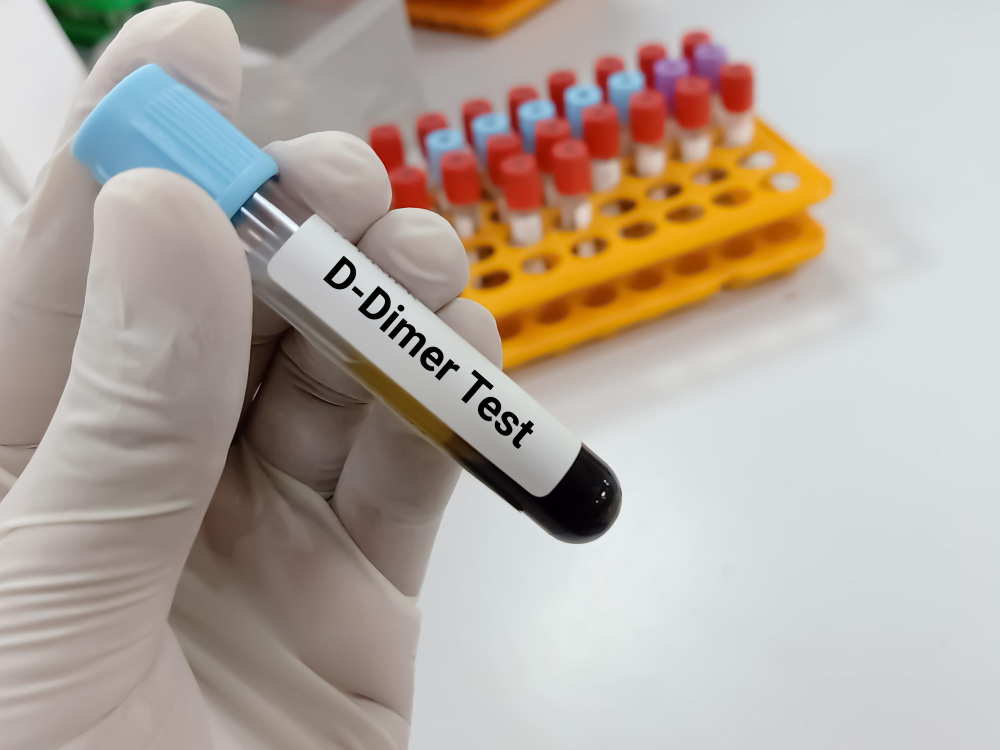
What Is a D-Dimer Test?
The D-Dimer test is a simple blood test. It helps doctors check for blood clots in your body. When your blood clots, it forms a protein called D-Dimer. This test measures the amount of D-Dimer in your blood. If the level is high, it may mean you have a blood clot. However, sometimes other conditions can also raise D-Dimer levels. For this reason, doctors use the D-Dimer test as part of a bigger plan to find out what is wrong. Often, this test is one of the first steps in blood clot detection.
Why Is the D-Dimer Test Done?
Doctors order the D-Dimer test for many reasons. Usually, they want to check if you might have a blood clot. For example, they may use it to look for deep vein thrombosis (DVT). DVT is a blood clot in a deep vein, often in the leg. In addition, the test helps find pulmonary embolism (PE), which is a clot in the lungs. Sometimes, doctors use the D-Dimer test after surgery or injury, especially if you have symptoms of a clot. In rare cases, it helps rule out other clotting problems, like stroke or certain heart issues.
How Does the D-Dimer Test Work?
First, a nurse or doctor takes a small blood sample from your arm. Next, the sample goes to a lab. There, experts measure the D-Dimer level in your blood. Normally, your body breaks down clots, leaving behind D-Dimer fragments. If you have a lot of these fragments, it may mean your body is fighting a blood clot. However, a low D-Dimer level often means you do not have a serious clot. The test is quick, and results can come back within a few hours, depending on your clinic or hospital.
Symptoms That May Lead to a D-Dimer Test
Doctors may order a D-Dimer test if you have symptoms that suggest a blood clot. For example, you may notice:
Understanding D-Dimer Test Results
After the test, your doctor will explain the results. If your D-Dimer level is low, it usually means you do not have a blood clot. On the other hand, a high D-Dimer level may suggest a clot is present. Still, other things like infection, recent surgery, or pregnancy can also raise D-Dimer levels. Because of this, your doctor may order more tests, such as an ultrasound or CT scan, to confirm if a clot exists. Sometimes, the D-Dimer test helps rule out a clot so you can avoid more testing.
Limitations and Considerations
While the D-Dimer test is helpful, it is not perfect. For instance, many things can affect the results. These include recent surgery, injury, infection, liver disease, or pregnancy. In older adults, D-Dimer levels can be higher even without a clot. Because of these factors, a high result does not always mean you have a blood clot. Therefore, doctors often use other tests to make sure. If you live in a city with high rates of certain illnesses, your doctor may consider these when looking at your results.
Prevention and Lifestyle Guidance
There are steps you can take to lower your risk of blood clots. For example, you can:
By making these changes, you can help protect yourself from blood clots.
Consult at Salunkhe Diagnostic Laboratory